


- Comprehensive sexuality education (CSE) aims to better knowledge and understanding, and to correct myths by providing youngsters with age-appropriate, scientifically proved, and culturally relevant knowledge about their bodies, health, relationships and rights. It also aims to promote self-estimation and norms that are equitable and respectful of others, by providing structured opportunities to debate and demonstrate ideas and feelings, attitudes and values, and to practice skills which helps young people stay healthy, build strong relationships, make informed choices, and seek help when needed.
- Better sex education (CSE) helps young people make informed and good or safe decisions, reducing risky behavior and promoting responsible choices.
- Programs that teach both late sex and using contraception or protection are more better than abstinence-only programs. sex education help reduce unwanted pregnancies and STIs.
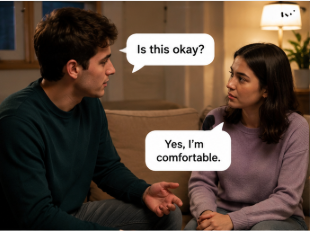
Teaching about sex
Consent defines both partners fully agree to any physical or sexual activity. recall it using the F.R.I.E.S. strategy:
- Freely Given: No anxiety, stress, blackmail, or force.
- Reversible: Anyone can change their mind and stop at any moment.
- Informed: Both people fully understand what they are doing. No lies.
- Excited: Based on real encouragement, not just a lack of the word “no.”
- Specific: Agreeing to one thing (like kissing) does not mean agreeing to others.
Clear Signs of Consent
Never assume what your partner wants. Look for these clear signs:
- Verbal Yes: Clear words like, “Yes, I am comfortable.”
- Body Language: Looking happy, making eye contact, and actively participating.
- Checking In: Asking during the moment, “Are you okay?” or “Should we move ahead?”
Red Flags: When It Is NOT Consent
Quit instantly if you see any of these situations:
- Silence: Partner is quiet, stuck, afraid, or not reacting.
- Hesitation: Saying “I don’t know,” “Maybe not,” or pulling away physically.
- Emotional Pressure: Guilt trips like, “If you loved me, you would do this.”
- Peer Pressure: Agreeing just to look cool or fit in with friends.
- Intoxication: Anyone drunk, high, or asleep cannot legally or morally consent.
Conclusion: No respect, No relationship.
Diapharagm birth control
Using condoms correctly protects against unplanned pregnancies and sexually transmitted infections (STIs). Follow this simple guide to ensure maximum safety.
How to Store Condoms
Proper storage prevents the latex from degrading and breaking.
- Cool & Dry: Keep them in a cool, dry place away from direct sunlight.
- Avoid Wallets: Do not keep them in your wallet; friction and heat cause micro-tears.
- Check the Date: Always look at the expiration date before opening.
- Sharp Objects: Keep them away from keys, scissors, or long fingernails.
Step-by-Step Guide to Using a Condom
Follow these steps every single time before any genital contact occurs.
- Check the Pack: Ensure the package is not expired and has an air bubble inside when squeezed.
- Open Carefully: Tear the wrapper along the serrated edge. Do not use your teeth or scissors.
- Find the Right Side: Ensure the condom rolls out easily. It should look like a little hat, not a bowl.
- Pinch the Tip: Pinch the air out of the top reservoir tip to leave space for semen.
- Roll It Down: While pinching the tip, roll the condom all the way down to the base of the erect penis.
- Use Water-Based Lube: Add water-based or silicone-based lube to prevent breakage. Never use oil-based lubes like lotion or vaseline.
- Hold and Withdraw: Pull out immediately after ejaculation while holding the rim of the condom firmly at the base.
- Dispose Properly: Wrap the used condom in tissue and throw it in the trash. Never flush it down the toilet.

3.Contraception
🩸 Managing Acne and Heavy Periods
- The Pill: Combination pills are FDA-approved to clear up acne and dramatically lighten heavy, painful periods.
- The Patch: It stabilizes hormones similarly to the pill, regulating your cycle and reducing severe menstrual cramps.
- The Implant: It does not help with acne, but it often makes periods much lighter or stops them completely after a few months.
🛡️ Pairing with Condoms for Dual Protection
- The Reality: Hormonal methods only prevent pregnancy; they offer 0% protection against STIs like HIV, herpes, or chlamydia.
- The Strategy: Always use external or internal condoms during sex alongside your hormonal method to block fluid exchange and skin-to-skin contact.
- The Benefit: This dual-method approach gives you the highest possible statistical defense against both unplanned pregnancy and infections.
🤫 Best Options for Privacy and Discretion
- The Implant: Highly private; it sits invisibly under the skin of your inner arm and leaves no packaging or trash in your room.
- The Pill: Less private; you must store pill packs safely and remember to take them daily, which can be noticed by others.
- The Patch: Visible on the skin unless hidden under underwear or swimwear, and requires weekly disposal of old patches.
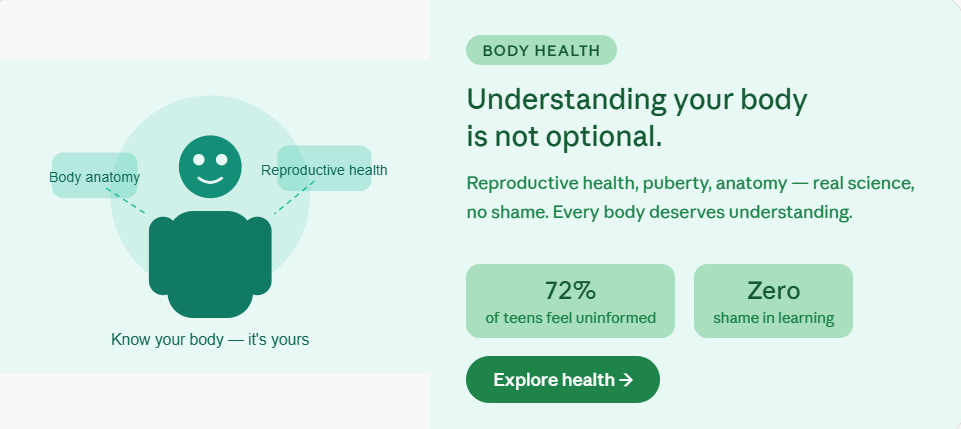
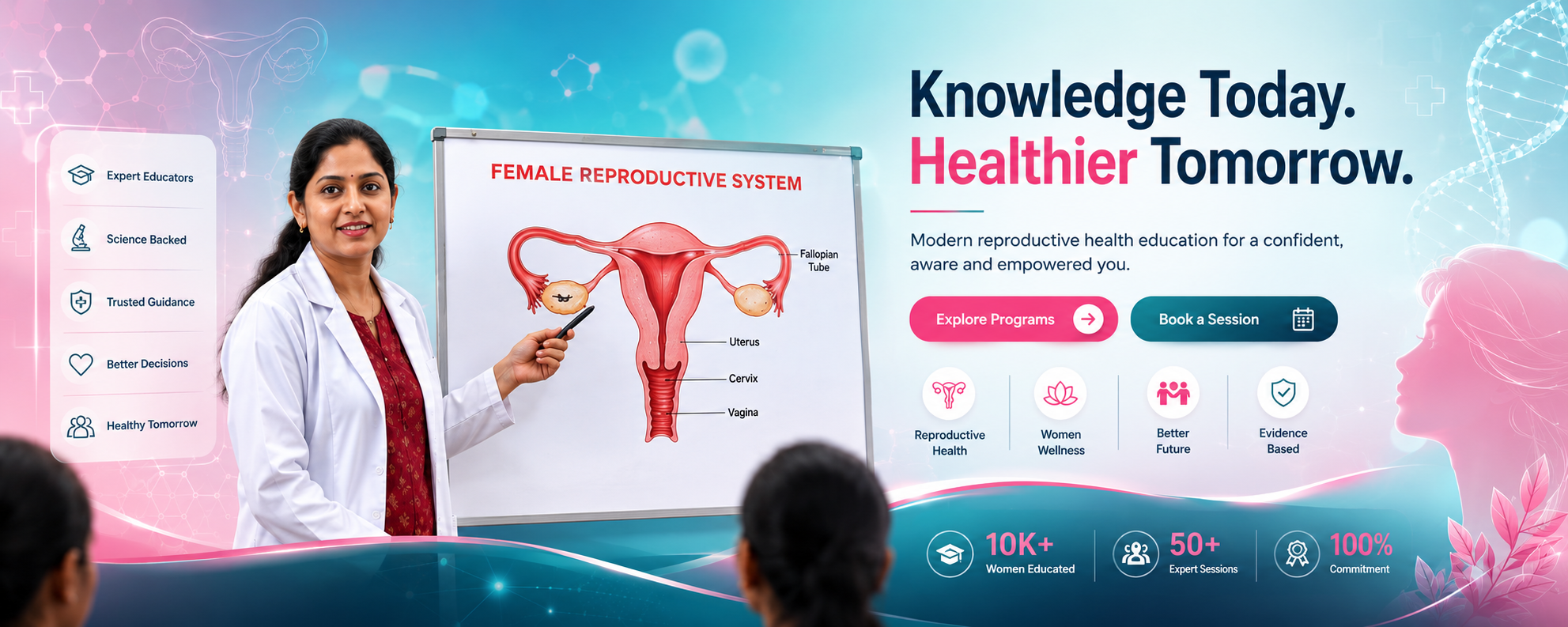
4.Body parts of human
🩸 Managing Acne and Heavy Periods
- The Pill: Combination pills are FDA-approved to clear up acne and dramatically lighten heavy, painful periods.
- The Patch: It stabilizes hormones similarly to the pill, regulating your cycle and reducing severe menstrual cramps.
- The Implant: It does not help with acne, but it often makes periods much lighter or stops them completely after a few months.
🛡️ Pairing with Condoms for Dual Protection
- The Reality: Hormonal methods only prevent pregnancy; they offer 0% protection against STIs like HIV, herpes, or chlamydia.
- The Strategy: Always use external or internal condoms during sex alongside your hormonal method to block fluid exchange and skin-to-skin contact.
- The Benefit: This dual-method approach gives you the highest possible statistical defense against both unplanned pregnancy and infections.
🤫 Best Options for Privacy and Discretion
- The Implant: Highly private; it sits invisibly under the skin of your inner arm and leaves no packaging or trash in your room.
- The Pill: Less private; you must store pill packs safely and remember to take them daily, which can be noticed by others.
- The Patch: Visible on the skin unless hidden under underwear or swimwear, and requires weekly disposal of old patches.
What are STD

An STI (Sexually Transmitted Infection) is an infection passed from person to person through sexual contact, including vaginal, oral, or anal sex.
High-Risk Complications of Untreated STIs
Ignoring an STI or delaying treatment can cause permanent damage to your reproductive system and overall health.
- Infertility: Infections like chlamydia and gonorrhea can travel up into the uterus and fallopian tubes, leading to Pelvic Inflammatory Disease (PID). This causes scarring that can permanently block the tubes, leading to chronic pelvic pain, ectopic pregnancy (a life-threatening pregnancy outside the uterus), or complete infertility.
- Increased HIV Risk: Having an open sore or inflammation from an STI like herpes, syphilis, or gonorrhea makes it much easier for HIV to enter the body during sexual contact.
- Cancer Link: Certain high-risk strains of Human Papillomavirus (HPV) cause cellular changes that directly lead to cervical, anal, penile, and throat cancers. Chronic Hepatitis B attacks the liver, greatly increasing the long-term risk of cirrhosis and liver cancer.
- Pregnancy Complications: A pregnant individual can pass infections like syphilis, HIV, or herpes to their baby during pregnancy or birth. This can result in stillbirth, severe birth defects, or infant blindness.

Talking to a Crush
Talking about safety and boundaries isn’t awkward—it is a total confidence move. Here is how to do it in three quick steps:
- 1. Use Pop Culture Cues 🎬: Bring up a scene from Sex Education to start the chat naturally. Say: “Did you see that episode where they fought over DMs? What do you actually consider a dealbreaker when dating?”
- 2. State Your Personal Rules 🙋♂️: Own your boundaries early before things get intense. Say: “Just so you know, I like to take things super slow when getting to know someone.”
- 3. Agree on an Out 🤝: Make safety a team effort. Say: “Let’s promise that if either of us ever feels uncomfortable, we just say it, no questions asked.”
The Ultimate Rule: Watch their reaction. A Green Flag crush listens and respects your lines. A Red Flag crush laughs it off or tries to push past them.
🛌 The “First Time” Myth: What to Actually Expect

Forget everything you see in movies—your first time is rarely a perfect, slow-motion romantic masterpiece. Here is the unfiltered truth:
- Expect Awkward, Not Perfect 🌀: It is usually clumsy, a little confusing, and involves a lot of weird sounds. That is completely normal! Laughter is a better lubricant than perfection.
- The “Virginity” Myth is Fake 🧢: Virginity is a social concept, not a medical condition. Losing it doesn’t change your worth, your body, or your identity. You are the exact same cool person five minutes after as you were five minutes before.
- It Doesn’t Define Your Future 🚀: If it is awkward, underwhelming, or just “okay,” it does not mean your romantic life is doomed. It is just a starting point, not the climax of your movie.
- Safety & Consent > Chemistry 🛡️: The only things that actually matter are that you both explicitly want to be there, you feel completely safe, and you are using protection.
The Bottom Line: Don’t let a calendar, peer pressure, or a movie script dictate your timeline. Do it when you are ready, with someone you trust, and drop the pressure to perform.

🎬 Real Life vs. Screen Life: The Intimacy Lie
Movies and internet videos are highly engineered fiction, not an instruction manual. Comparing your real-world intimacy to a screen is a recipe for instant disappointment. Here is why:
- The Perfection Illusion 🕯️: On screen, the lighting is flawless, the music swells perfectly, and nobody ever gets a leg cramp or awkward laughter. In reality, real intimacy is messy, unchoreographed, and full of weird human noises.
- The “Instant Chemistry” Myth 🧪: Screen characters have instant, mind-reading connections. In the real world, good intimacy requires actual communication, awkward check-ins, and vocal feedback like, “Hey, do you like this?” or “Wait, stop, that hurts.”
- The Danger of Internet Videos ❌: Adult videos completely erase reality. They skip over crucial things like enthusiastic consent, emotional connection, and protection. They focus on performance for a camera, not real-world pleasure or safety.
- The Edited Outtakes 🎞️: You see a two-minute scene on screen, but you don’t see the hours of makeup, professional directors, and retakes it took to make it look that way.
The Bottom Line: Don’t let a Hollywood director or an algorithm dictate how your real-world relationships should look. Real intimacy is built on comfort, safety, and being perfectly imperfect together.
🏥 Going to the Clinic: What Actually Happens
Going to a sexual health clinic can feel intimidating, but the reality is incredibly simple, routine, and usually completely painless. Here is the step-by-step breakdown of what to expect:
- 1. Total Confidentiality 🔒: Your information is completely locked down. Clinics specialize in privacy, meaning they will not share your results or your visit with your parents or anyone else without your explicit permission.
- 2. The Honest Talk 💬: A nurse or doctor will sit down with you in a private room to ask standard questions about your health, symptoms, and sexual history. They are medical professionals who have seen and heard it all—be completely honest so they can run the right tests.
- 3. Easy Sample Collection 🧪: There is no single test for everything, and you rarely have to undress. Most routine screenings just involve peeing in a cup or a quick blood draw/finger prick. If you have symptoms, they might use a soft cotton swab to take a quick sample from your throat or genitals.
- 4. The Results 📱: Rapid tests (like for HIV) can give you answers in about 20 minutes. Other tests are sent to a lab, and results typically take a few days to a week. The clinic will contact you if anything comes back positive so they can give you medication to clear it right up.
The Bottom Line: A sexual health clinic is a non-judgmental, sex-positive space designed to keep you safe. Getting tested isn’t a scary interrogation—it is just routine maintenance for your body, like going to the dentist.

🛑 Dealing with Pressure: Deciding When You are Truly Ready
Peer pressure makes it feel like everyone else is hitting milestones while you are left behind. Spoiler alert: they are usually exaggerating. Here is how to take control of your own timeline:
- The “Everyone is Doing It” Illusion 🧢: When people talk about their romantic or intimate lives in hallways or group chats, multiply the awkwardness by ten and divide the action by two. Most of it is bravado. You are not falling behind.
- The “Ready” Checklist 📝: You are truly ready when your motivation comes from inside you, not from a desire to fit in, keep a partner, or tick a box. If you feel anxious, pressured, or like you are bargaining with yourself, that is a clear “not yet.”
- The “No-Explanation” Out 🛑: “No” is a complete sentence. You do not owe anyone a PowerPoint presentation explaining why you want to wait, slow down, or stop. A partner who genuinely respects you will accept your boundary without making you feel guilty.
- Flipping the Script on Pressure 🔄: Turn the question back on them. If someone is pushing you, you can say: “I’m just not there yet, and I’m totally cool with that. Why are you so obsessed with my timeline anyway?” Confidence instantly shuts down pressure.
The Bottom Line: Your body, your pace. Intimacy isn’t a race with a trophy at the finish line—it is a personal choice that only matters when it feels 100% right to you.
